

Bone Grafting – Dumfries, VA
Setting Your Dental Implants Up for Resounding Success
If you’ve lost one or more teeth, you might be considering dental implants. After all, you’re probably already familiar with all the life-changing benefits that come with this superior tooth replacement solution. However, you might’ve also been told that before you can receive dental implants, you’ll need to undergo a preliminary procedure known as a bone graft. When patients don’t have enough jawbone density to support dental implant posts, bone grafting is often recommended—and it can ensure that your new smile is set up for future success. To learn more or schedule a consultation, just contact our team today.
Why Choose Oral & Facial Surgery Center of Virginia for Bone Grafting?
- Friendly Dental Team with Years of Experience
- Dental Insurance Accepted & Financing Available
- Entire Process Completed Under One Roof
What Is Bone Grafting?
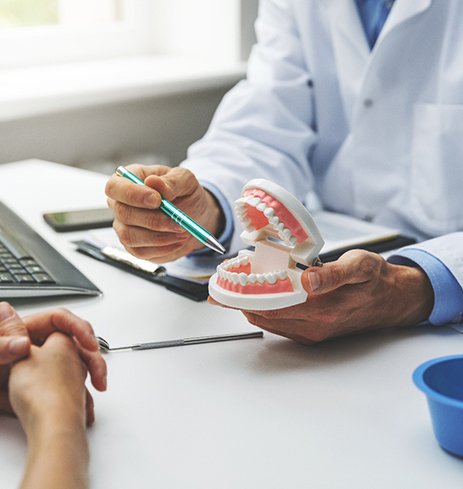
A dental bone graft is a procedure that’s sometimes used to help maintain or restore the shape and size of a patient’s jawbone. When teeth are lost, that particular area of the jawbone often begins to shrink and deteriorate, since it lacks the stimulation that was once provided by the roots of the teeth. However, this is problematic for patients looking to address their tooth loss with dental implants; in order to support the posts, there needs to be enough bone tissue present. Bone grafting addresses this issue by relocating healthy bone tissue to the weakened area, and it often serves as the most important preliminary step before dental implant placement.
Bone Grafting After Tooth Loss
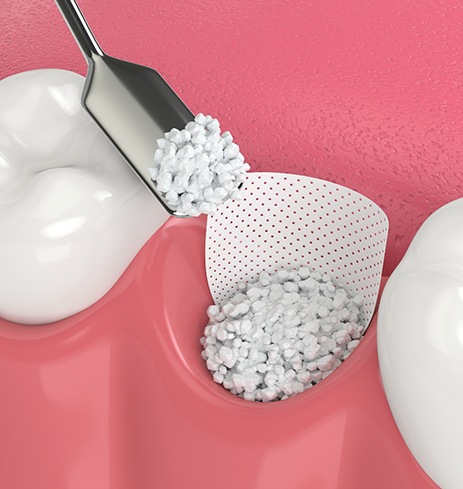
If you’ve been without one or more of your teeth for a while, chances are, you’ve experienced some degree of bone resorption in your jaw, meaning that the tissue around the gaps has deteriorated. There isn’t anything you can do to control this; without the roots of your teeth stimulating the jawbone tissue, your body naturally breaks it down. When this happens, a small amount of bone material (either from another part of your mouth or a synthetic source) can be placed over the area to rebuild the lost tissue.
Bone Grafting After Tooth Extraction
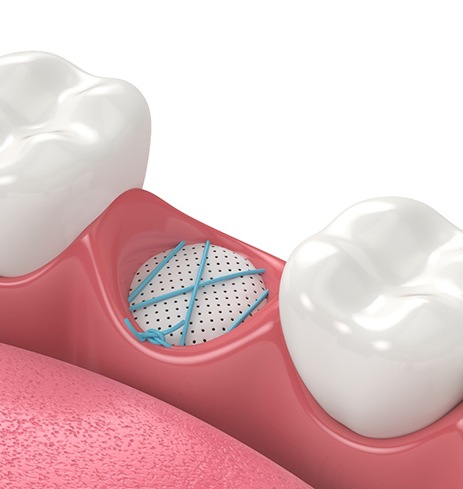
In instances when you need to undergo tooth extraction prior to receiving dental implants, it is still possible that you will need to undergo bone grafting, too. Following the removal of the tooth, the extraction site can be freeze-dried with the grafting material before it’s covered with a thin membrane and sutured shut. It will then need several months to heal before you’ll be ready to support the implant posts.
What Are the Benefits of Bone Grafting?
Bone grafting offers many life-changing advantages for patients dealing with jawbone loss. A healthy, rebuilt jawbone opens the door to a wider range of restorative treatments and helps you maintain a natural, confident appearance for years to come. Some of the key benefits include:
- Restores the foundation needed to support dental implants and other restorative procedures
- Prevents the sunken appearance that often accompanies prolonged tooth loss
- Stabilizes neighboring teeth and supports a healthier bite
- Reduces your risk of decay in other teeth as well as periodontal disease