

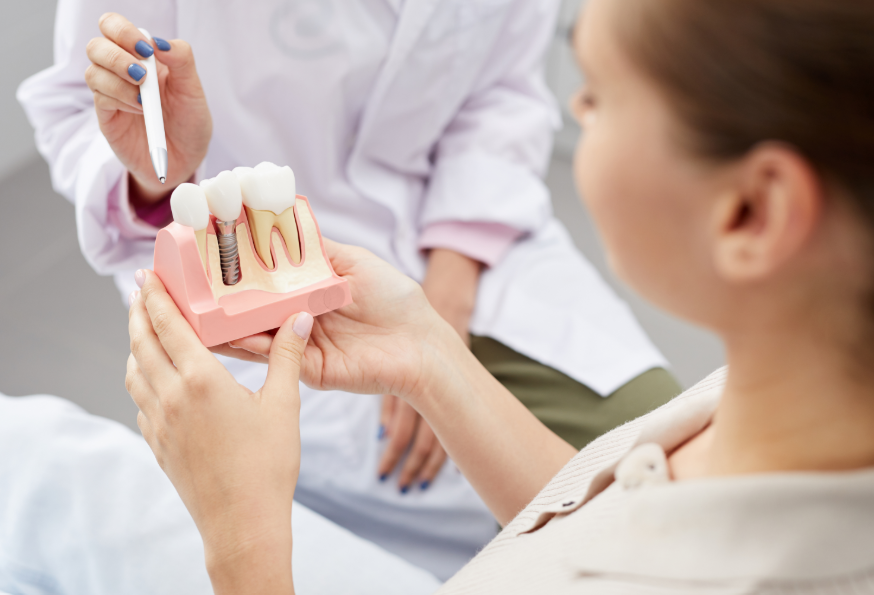
Dental implants are a popular way to replace missing teeth, offering a stable foundation that can look and function much like a natural tooth. But before an implant can be placed, your jawbone needs to be strong and dense enough to support it. If you’ve experienced significant bone loss, your dentist or oral surgeon may recommend a bone graft first.
Why Does Your Jawbone Matter?
A dental implant isn’t simply placed on top of the jawbone. The implant post is surgically inserted into the bone, where it gradually integrates with the surrounding tissue through a process called osseointegration. This creates the stable foundation needed to support an artificial tooth.
When you lose a tooth, the jawbone that once supported its root no longer receives the same stimulation. Over time, the bone can begin to shrink or lose density. The longer a tooth has been missing, the more likely significant bone loss may become.
If there isn’t enough healthy bone available, there may not be sufficient support for an implant.
What Does a Bone Graft Do?
A bone graft can help rebuild areas of the jaw where bone has been lost. During the procedure, grafting material is placed in the area that needs additional volume and allowed to heal.
As the graft heals, it can provide a framework for your body to build new bone. Once the area has developed enough strength and density, it may be possible to move forward with dental implant placement.
The amount of time needed for healing varies depending on the individual and the extent of the graft. Your oral surgeon can explain what to expect based on your specific situation.
Does Everyone Need a Bone Graft?
Not necessarily. Whether you need one depends on the amount and quality of bone available at the planned implant site.
Some patients have enough bone to support an implant immediately after a tooth is removed or without any additional preparation. Others may have experienced substantial bone loss and require grafting before implant placement.
Your oral surgeon can use dental imaging to evaluate your jawbone and determine whether grafting is recommended. In some cases, a bone graft can even be performed at the same time as tooth removal to help preserve the bone for a future implant.
What Happens After a Bone Graft?
Bone grafting adds an additional step to the implant process, but it can be an important one for patients who don’t have enough bone to support an implant safely and effectively.
After the graft is placed, you’ll need to follow your surgical team’s instructions during the healing period. Once the area has healed sufficiently, your oral surgeon can reassess the site and determine when you’re ready for implant placement.
Building a Strong Foundation
A bone graft isn’t required for every dental implant patient, but when bone loss is present, it can help create the foundation necessary for successful implant treatment. If you’re considering an implant, a thorough evaluation is the best way to determine whether grafting is part of your treatment plan.
Taking the time to build a strong foundation can help set your new smile up for long-term success.
About the Practice
At the Oral & Facial Surgery Center of Virginia, Dr. Shinwari provides specialized oral and maxillofacial surgical care, including bone grafting procedures that can help prepare patients for dental implants. The practice’s surgical team evaluates each patient’s individual needs and develops treatment plans designed to support successful outcomes and comfortable care.
Call us at (703) 574-4717 or schedule your appointment online.